
Principles of Action
Volatile air pollutants
Unpolluted
contaminated air
Reactive Filter
Contaminants are captured by the filter (irreversibly absorbed, converted into harmless, non-volatile products).
AIR TECH GROUP, S.L.U. – Research and Development
Nitrogen oxides (NOX)
Know-how on NOX elimination, at room temperature
Formaldehyde (methanal, CH2O) and other volatile aldehydes
2 patents
- Air filter for removing aldehyde-like VOCs from indoor air, PCT/EP2019/068116, WO2020/008041
- A filter and a method for removing aldehyde-like VOCs from indoor air, PCT/EP2020/082639, WO2021/129985
Sulfur dioxide (SO2)
Know-how on SO2 elimination
Organic Sulfur Compounds
WO 2025/233539 A1
- Filter System for the Removal of Volatile Organosulfur Compounds (VOSCs) from Indoor Air
Volatile Organic Compounds (VOCs or VOCs, various groups)
In R&D phase
Carbon monoxide (CO)
In R&D Phase
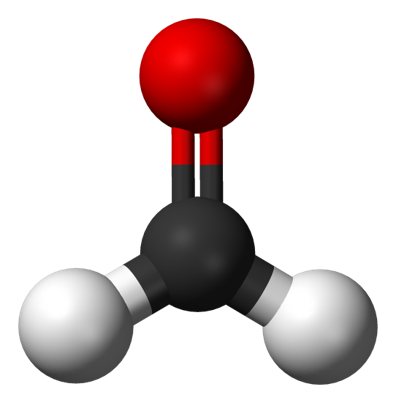
Formaldehyde
Removal of formaldehyde (CH2O) and other aldehydes.
- Our patent-protected decontaminant material is a mixture of diphenols and triphenols and an acid catalyst.
- Examples of use: this material, in the form of an ATG filter, can be incorporated into a simple purifier; our absorbent can also be added to an activated carbon filter commonly used in air purifiers.
- Formaldehyde (gas given off by formica furniture, parquet and resins, formaldehyde/formaldehyde solutions or paraformaldehyde polymer) and other aldehyde vapors react at room temperature with AIR TECH’s patented absorbent to give a stable, non-volatile product (a polymer).
- The product can be raw material for industry (not waste).
- No by-products or co-products are generated.
- High conversions (high reaction yields) are obtained.
Our Results / CH2ORemoval
Tested in real conditions of use, our filter reduces the concentration of formaldehyde to below legal (WHO) limits of 0.03 ppm.


